
China is gradually transforming from being the largest oil importer tothe main regulator of demand in the world market.
According to analysts, the country's reserves could reach1–1.4 billion barrels— approximately 120 days of import. Beijing does not disclose the exact volume, so estimates are based on data on imports, processing and storage.
Beijing has stopped competing for oil
After the outbreak of the conflict over Iran, China sharply reduced purchases.
In June, seaborne imports fell by about 41% year-on-year, and in July stood at about 8.4 million barrels per day, well below pre-crisis levels.
At the same time, the domestic market did not face a proportional fuel shortage.
Beijing used accumulated reserves, reduced refinery utilization and limited the export of petroleum products.
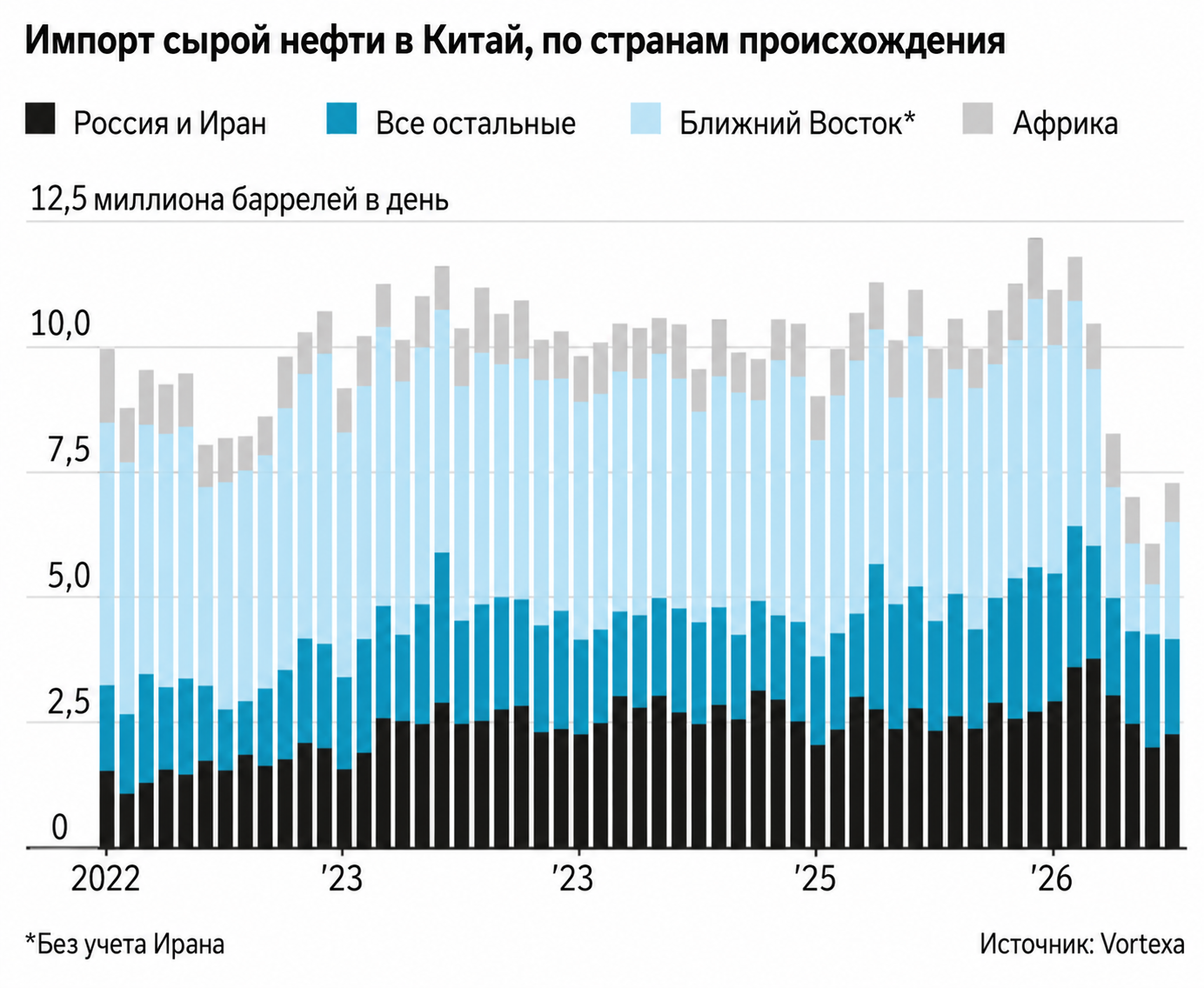
Crude oil imports into China by country of origin. The share of Russia and Iran remains significant, but total purchases fell sharply in 2026. Source: Vortexa
Why is this important for oil?
While China is not actively entering the market, it is easier for other buyers to compensate for the loss of Middle Eastern supplies.
This is why China is actually creatingceiling on oil prices.
But the mechanism also works in the opposite direction.
As Beijing begins to rebuild supplies, additional demand will come into an already constrained market.
In July, China had already unexpectedly returned to a small oil accumulation: Vortexa's estimate indicates a surplus of available oil of about210 thousand barrels per day.
Main risk for the market
Sinopec is already talking about the need to actively search for oil outside the Middle East - in Brazil, Africa and other regions. At the same time, the company has a supply of raw materials for approximately 20 days of work.
If imports begin to recover at the same time as processing normalizes, China could quickly move from being a pressure topowerful source of demand.
Main conclusion
Now China is helping to contain the oil market.
But this is not necessarily a bearish signal for the long term.
The longer Beijing delays large-scale purchases, the more important the timing of its return becomes.
If China begins to actively replenish reserves again, the oil market could receive a completely new price impulse.