
Blogs
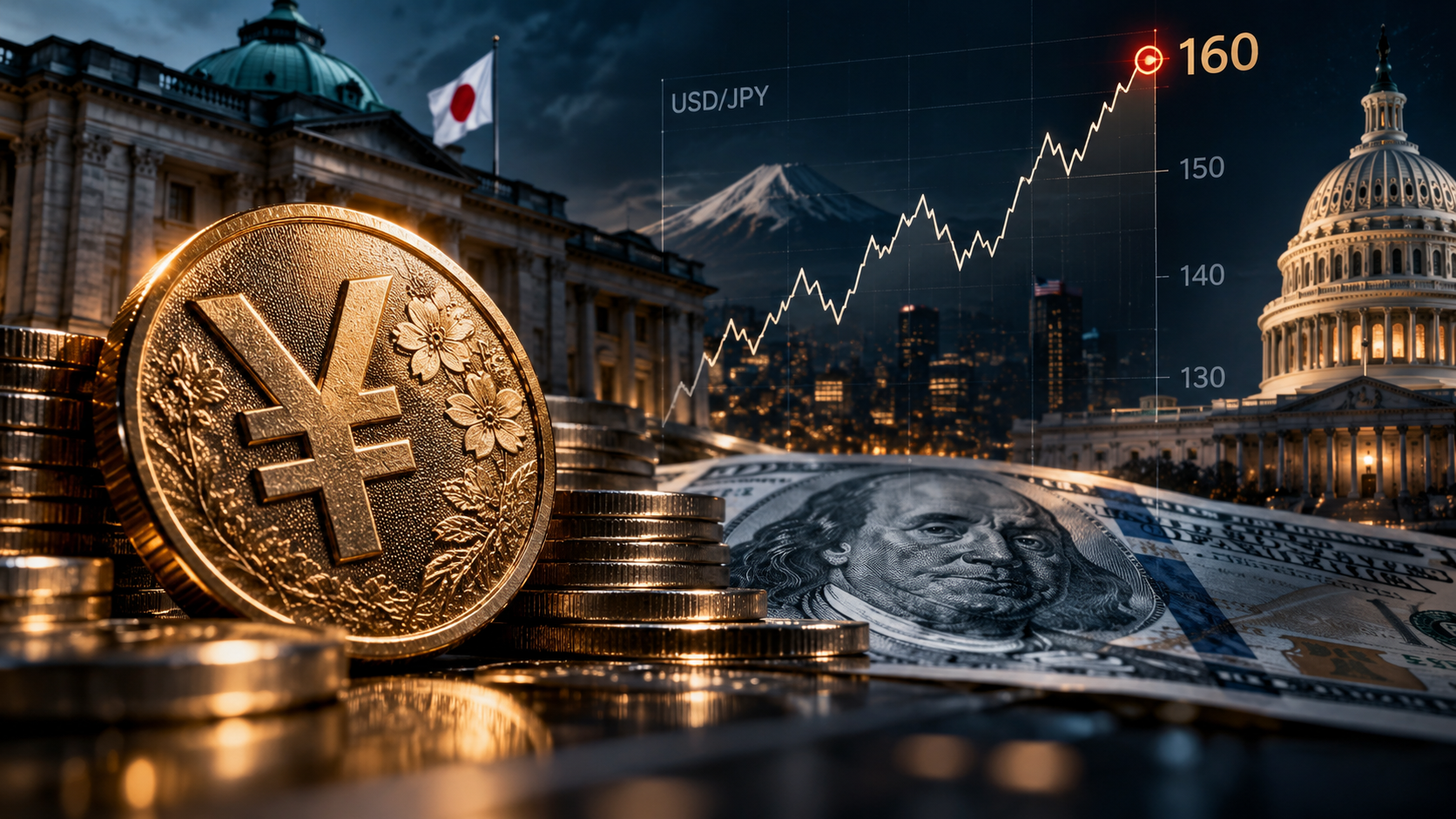
Japan's $97.5 billion intervention: why the yen is under pressure again
Japan spent a record ¥15.4 trillion to support the yen, and the US joined joint currency intervention for the first time in decades. But fundamental factors continue to put pressure on the Japanese currency. Why does government intervention not guarantee a sustainable USD/JPY reversal?
Read More
Blogs
Europe sharply increases demand for gold: ETF flows outpace the US
Flows into gold ETFs from the UK, France and Germany accelerated sharply in the second half of 2026. Why are European investors increasing exposure to gold now and what does this say about the perception of fiscal and market risks?
Read More
Blogs
BoJ is preparing further rate hikes, but weak consumption remains a problem
Board member of the Bank of Japan Ayano Sato supports a gradual further increase in rates, but the weak dynamics of consumer spending remains an important constraint for the regulator. Why does BoJ have to balance between inflation and domestic demand?
Read More
Blogs
BoJ is preparing for new rate hikes, but weak consumption remains the main risk
Board member of the Bank of Japan Ayano Sato supports further gradual rate hikes, but acknowledges the weakness of consumer spending. For BoJ, this creates a difficult balance between the fight against inflation and the risk of pressure on domestic demand.
Read More
Blogs
Why the euro is falling: what is happening to EUR/USD and why the dollar is strengthening again
EUR/USD fell to 1.12 and hit a 17-month low. Let's figure out why the euro was under pressure, what does France have to do with it, the Fed and ECB rates, and what can change the situation.
Read More
Blogs
Gold is experiencing one of the most volatile years in decades: already 7 falls of 3.5% or more
Gold futures have already fallen by at least 3.5% in one trading session seven times in 2026. This is the highest value since 2008 and more than double the figure for the whole of 2025.
Read More
Blogs
Рынок сужается: только 25% акций S&P 500 выше 50-дневной средней
S&P 500 сохраняет относительно высокие уровни, но внутренняя структура рынка быстро слабеет. Лишь 25% компонентов индекса находятся выше 50-дневной средней, а новые 52-недельные минимумы значительно опережают максимумы.
Read More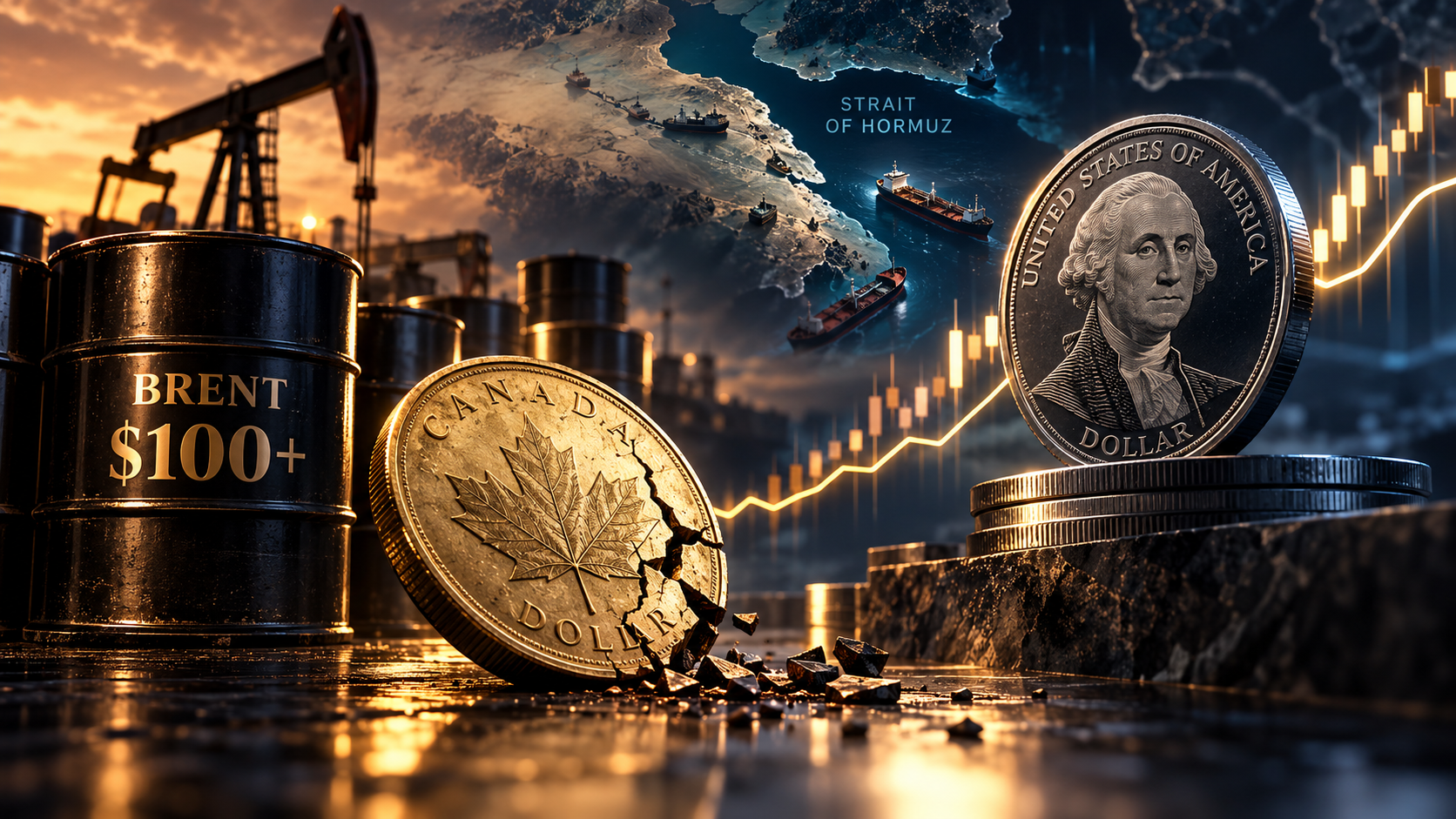
Blogs
Why is USD/CAD growing despite expensive oil? Three reasons for the weakening Canadian dollar
USD/CAD has risen from 1.38 to 1.415 almost without a pullback since the beginning of September. The paradox is that oil remained at extremely high levels during this time. Let’s look at why the traditional relationship “expensive oil - strong CAD” is now working much weaker.
Read More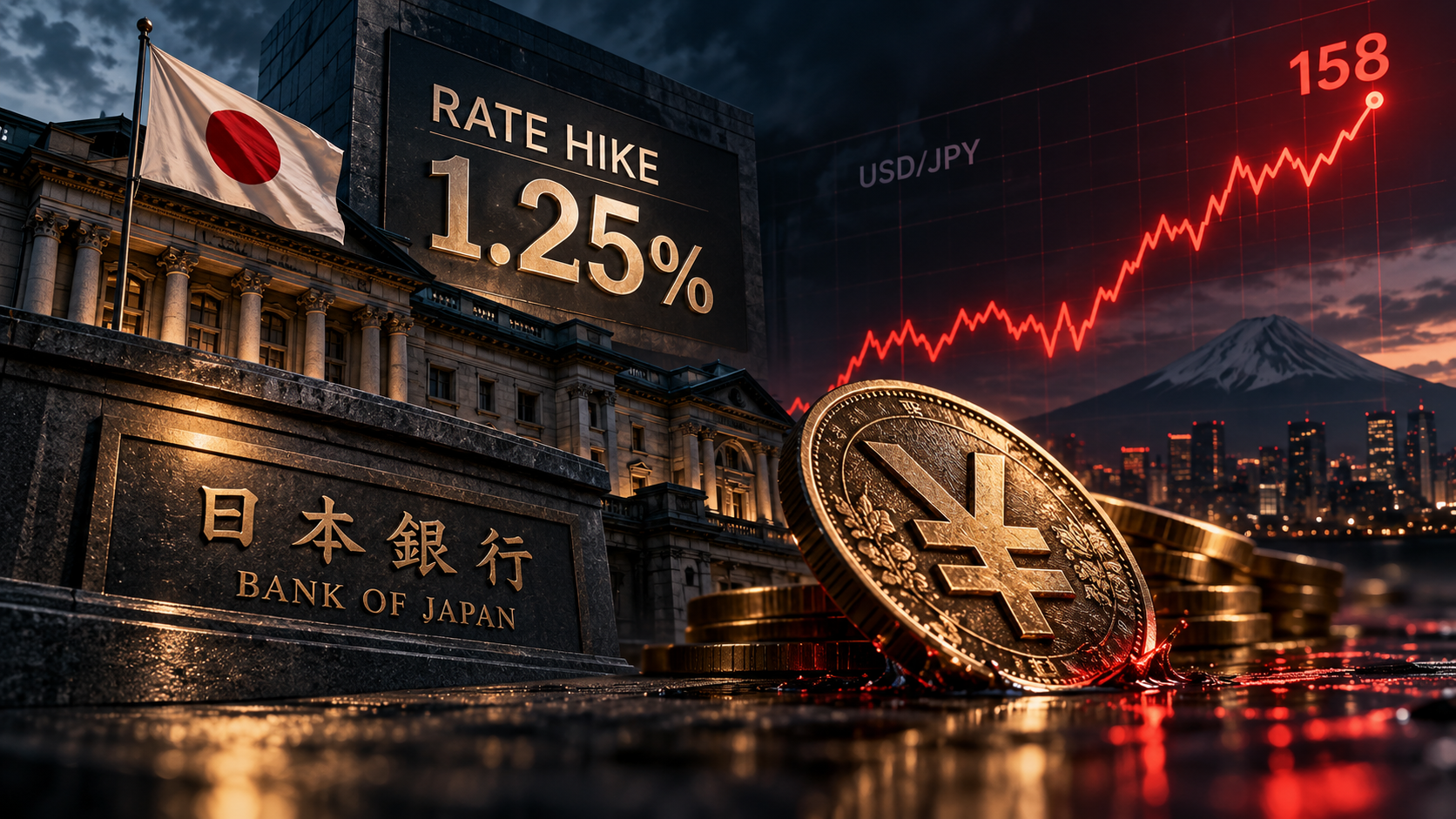
Blogs
The Bank of Japan raised the rate to 1.25%, but the yen fell: what happens to carry trade
The Bank of Japan raised the rate to 1.25%, the highest since 1995, but the yen weakened after the decision. Why did the rate hike not stop the currency and what role does the persistent gap with US rates play here?
Read More
Blogs
Gold is rolling back: where can a buyer appear and why the market is watching $4,300
After a strong growth, gold entered the correction phase. But the fall in the price does not mean that interest in the metal has disappeared. In contrast, gold ETFs received $18 billion in new funds in August, their aggregate holdings reached a record 4,189 tons, and gold imports to China exceeded 1,000 tons in the first eight months of 2026.Let's see where the key areas are on the XAUUSD chart and what can determine the next movement of gold.
Read More
Blogs
Ethereum has woken up again: who is pushing ETH up and where can the price go next?
Ethereum accelerated again and rose above $2,700. We understand who is behind the current demand for ETH: American ETFs, institutional investors or large holders, and what could happen to Ethereum next.
Read More
Blogs
Gold after correction: where to look for a buyer and why demand from China can change the game
Gold is adjusting after strong growth, but big buyers haven't disappeared. We analyze the three key areas of XAU/USD and find out who is currently supporting the market: China, central banks or gold ETFs.
Read More
Blogs
Bitcoin rushed to $85,000: who pushes BTC up and where did the money come from?
Bitcoin returned from the $75,000 area to $85,000 in a matter of days and updated in a maximum of eight months. But what is behind this movement? We analyze ETF flows, purchases of institutional players, elimination of shorts, macroeconomic background and behavior of large BTC holders.
Read More
Blogs
WTI oil: three key levels for purchases against the backdrop of a global supply shortage
The WTI oil price has retreated after strong growth, but the medium-term picture remains mixed. The chart shows three potential areas of interest for buyers: $95.74, $94.84, and $93.93. We understand why the market is adjusting, what happens to oil supplies and what factors can determine the next move.
Read More
Blogs
Bitcoin September 14, 2026: levels of BTC purchases against the backdrop of an outflow from ETFs and an increase in rates
Bitcoin is trading around $77,590 after declining from local highs. Rising bond yields, expectations of Fed rate hikes, and weakening inflows into spot BTC-ETFs are putting pressure on the crypto market. We analyze the key areas of Bitcoin purchases on the BTCUSD H2 chart.
Read More
Blogs
GOLD SEPTEMBER 2: MARKET CRASHES UNDER YIELD PRESSURES
Gold came under heavy pressure in early September. The growth of oil, Treasuries yields and expectations of the Fed rate hike forces buyers to retreat. But a large support area is already close.
Read More
Blogs
BTC September 2: Bitcoin is under pressure again. Where to look for a rebound?
After a strong August, Bitcoin started September with a correction. Now the market is testing whether BTC will survive the key support zone against the backdrop of rising yields, oil and expectations of tighter Fed policy.
Read More
Blogs
S&P 500 September 1: Where to look for purchases after a correction
The S&P 500 enters September after a strong August, but the start of the month comes under pressure from rising Treasury yields and expectations of a Fed rate hike. On the chart, the key areas for shopping searches are at 7666, 7650, and 7634.
Read More
Blogs
CAC 40 September 1: where to look for purchases after a decline
CAC 40 enters September after a correction from August highs. On the chart, the nearest shopping search areas are located at 8290, 8271, and 8252. At the same time, the macrophone of Europe remains ambiguous: the industry is accelerating, but inflation and high bond yields limit the potential of the index.
Read More
Blogs
Ethereum September 1: ETH Gets Institutional Demand Support
Ethereum starts September around $2,434 after a strong recovery in August. Technically, the key areas for purchases remain $2,401, $2,379 and $2,356. Fundamentally, ETH receives support from a record series of inflows into ETFs and a reduction in the available supply.
Read More
Blogs
Bitcoin August 31: Key $80,000 Test Could Determine Next Impulse
Bitcoin is again approaching an important resistance zone around $80,000. A potential double bottom is formed on the weekly chart, but the market has not yet received the main confirmation — a steady breakout of resistance. If the level is taken, the technical structure can improve dramatically.
Read More
Blogs
US100: Nasdaq maintains bullish momentum — August 28
US100 holds the upward structure after recovering from August lows. The main shopping search areas are at 29,334, 29,210, and 29,087. The index is supported by strong Nvidia results and continued demand for AI, but high Treasuries yields and Fed Chairman Kevin Warsh's speech create increased volatility.
Read More
Blogs
GER40: German market returns risk appetite — August 28
The German stock market is receiving support from several sides at once: the German economy is showing signs of recovery, business sentiment is growing, and the decline in oil prices reduces inflationary pressure. At the same time, the main risk for GER40 is a possible tightening of the ECB policy.
Read More
Blogs
Bitcoin August 28: correction opens up areas for purchases
Bitcoin is holding around $79,500 after a sharp recovery above $80,000. The return of institutional demand, inflows into spot ETFs and expectations of changes in Fed policy support a bullish scenario, but the $80,000-82,000 zone remains a serious resistance.
Read More
Blogs
WTI: oil analysis on August 27 — where to buy after a sharp correction
WTI fell sharply from $88 to $80–82 amid hopes for de-escalation of the conflict around Iran. However, the fundamental picture remains ambiguous: supply is still limited due to supply problems through Hormuz, and American stocks are growing. On the chart, the key buying areas are at 79.37, 78.31 and 77.25.
Read More
Blogs
XAGUSD: Silver Analysis for August 26 — Buying Zones and New Momentum Potential
Silver maintains a strong structure after a large-scale growth and now forms a correction near local highs. The chart highlights three key areas of customer interest — 67.36, 66.72 and 66.08. The fundamental background remains supportive due to industrial demand, supply shortage and general investor interest in precious metals.
Read More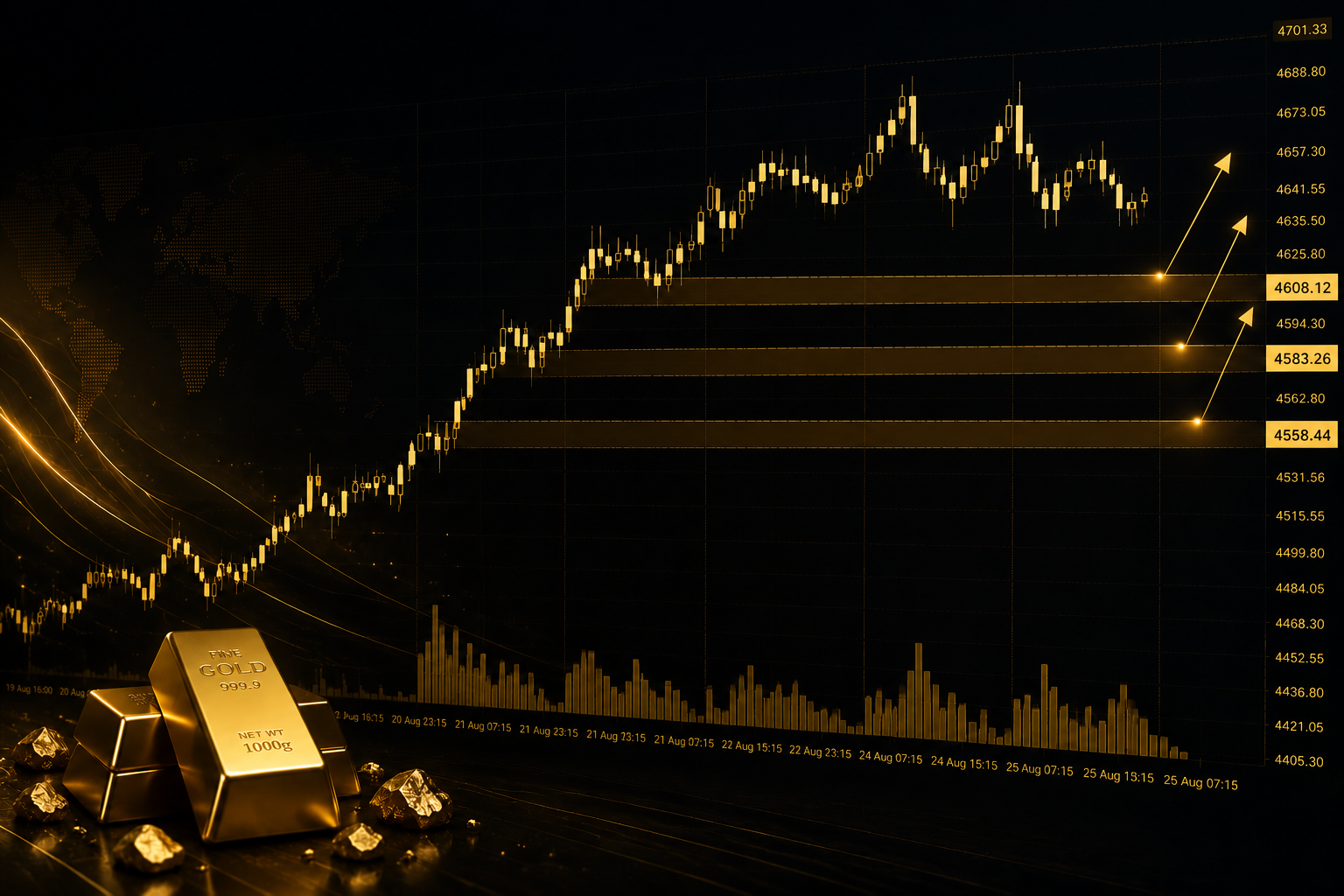
Blogs
XAUUSD: gold is preparing a new movement — where to look for entry points on the correction
After the update of historical highs, gold entered the consolidation phase. Three key areas of customer interest are formed on the chart — 4608, 4583 and 4558. At the same time, the fundamental background remains supportive: demand from central banks, investment flows and risks around the US debt burden continue to strengthen the attractiveness of gold.
Read More
Blogs
XAUUSD: where to buy gold on the correction and why the growth is not yet over
Gold moved into consolidation after strong momentum, but the medium-term structure remains bullish. The chart highlights three key areas for possible purchases — 4601, 4578 and 4553. The fundamental backdrop also remains favorable: ETF flows are recovering, central banks are maintaining demand, and uncertainty around rates, the dollar, and US debt is underpinning defensive assets.
Read More
Blogs
ETHUSDT: where to buy Ethereum on the correction and what supports growth
Ethereum maintains a bullish structure after a strong recovery. The chart highlights three key areas for a possible position set — 2411, 2392 and 2374. At the same time, an improvement in ETF flows, an increase in institutional demand and an increase in the share of ETH in staking create fundamental support for further upward movement.
Read More
Blogs
WTI after correction: will oil be able to continue to grow?
After a strong recovery, WTI oil entered a consolidation phase near important support levels. We analyze the technical picture, areas of interest of buyers and fundamental factors that can determine the next movement of the oil market.
Read More
Blogs
Dow Jones forms a U-turn: where is the zone of interest of US30 buyers
The Dow Jones (US30) rebounded after a sharp correction and forms a new base near important support levels. We analyze the technical picture, areas of potential purchases and macro factors that can support the further movement of the American market.
Read More
Blogs
Gold is preparing for a new impetus: where to look for XAU/USD entry points
Gold remains one of the top assets of 2026 amid expectations for Fed rates, central bank purchases, and rising demand for defensive assets. We analyze the current technical picture of XAU/USD, key areas for purchases and fundamental factors that can support further growth of the metal.
Read More
Blogs
The Fed is Losing a Major Tool: Why the AI Boom Is Ignoring High Rates
Since 2022, the Fed has sharply raised rates to cool the economy. But one of the main channels of influence began to work differently: office construction collapsed, and investments in data centers soared to record levels. Artificial intelligence has created a sector that is not yet responding to expensive money in the way the regulator expected.
Read More
Blogs
US Debt Exceeds $40 Trillion: Why Maintenance Costs Are Becoming a Major Issue
The US national debt crossed the $40 trillion mark for the first time. In recent years, the rate of debt growth has accelerated sharply, and interest payments have already become one of the largest items of budget expenditure. Why the market is paying more and more attention not to the size of the debt, but to the price of its servicing.
Read More
Blogs
Gold is back in fashion: global ETFs raised $3.5 billion in a week
Physically backed gold ETFs received $3.5 billion in a week, and the total inflow for six weeks reached $10 billion. Investors are again actively increasing their positions in gold, with Europe being the main source of demand.
Read More
Blogs
Hedge funds are returning to the US: institutions are buying risk again
Hedge funds made the second largest purchase of US stocks in the last 12 months. About 70% of the demand came from individual companies, and the IT and communications sector became the main areas of capital inflows. What made institutionalists return to the market after a large-scale reduction in positions in July?
Read More
Blogs
The S&P 500 is almost unafraid of risk: why it can end in a surge in volatility
The 260-day volatility ratio of the S&P 500 to gold dropped to 0.46. Historically, such low values have often been harbingers of a return of volatility to average levels. What the market may be underestimating right now.
Read More
Blogs
Asian markets are shaking: why the sale in Japan and South Korea is dangerous for the entire region
The Japanese and South Korean markets faced a sharp sell-off, wiping out hundreds of billions of dollars in capitalization. But the main issue is not the size of the fall, but its mechanics: high concentration in technological stocks, borrowed positions and synchronous capital outflows can quickly increase volatility.
Read More
Blogs
India has become Asia's least-loved market: why investors are turning their backs on Nifty
India replaced Indonesia as Asia's least preferred stock market. In a Bank of America survey, a net 32% of managers have an underweight position, and the Nifty 50 has lost about 8% since the beginning of the year. High marks, weak growth, and a lack of explicit exposure to AI are forcing investors to rethink “Indian history.”
Read More
Blogs
Wells Fargo downgrades gold outlook: bullish scenario weakens but not disappears
Wells Fargo revises gold expectations amid high bond yields and tighter Fed expectations. At the same time, the bank maintains a long-term positive outlook on the metal, relying on central bank purchases, geopolitical risks and demand for gold as a reserve asset.
Read More
Blogs
Will the Fed raise interest rates in September? Goldman Sachs argues with the market
Goldman Sachs considers the September Fed rate hike unlikely after weak data on employment, inflation and consumer activity. But the forecast markets look further: Kalshi estimates the likelihood of the next increase until 2027 at almost 50%, and by July 2027 it is already about 70%.
Read More
Blogs
Trump's approval rating drops to 33%: war with Iran becomes a political problem
Donald Trump's support has fallen to 33% — the lowest level during his current presidency. 64% of Americans do not approve of his work, and 80% believe that the conflict with Iran will last longer. For the White House, this is especially dangerous against the background of rising fuel prices and the approaching midterm elections.
Read More
Blogs
China is accumulating the currency, but is in no hurry to strengthen the yuan: why Beijing needs exchange rate control
China received a record 12-year increase in foreign exchange reserves on the international balance sheet in the second quarter. At the same time, the yuan continues to strengthen, but the authorities clearly do not want to allow the exchange rate to grow too fast. Why Beijing prefers managed strengthening and what it means for the foreign exchange market.
Read More
Blogs
Japanese bonds at their highest since 1996: the era of cheap money is really coming to an end
The yield on 10-year Japanese government bonds rose to 2.93% and reached a maximum in almost 30 years. The market estimates the probability of a rate hike by the Bank of Japan in September at about 80%. Why the weak yen, inflation and rising government spending are forcing investors to reconsider their attitude to Japanese debt.
Read More
Blogs
Norwegian Oil Fund Earns $184 Billion: AI Becomes the Main Driver of Global Portfolios
The world's largest sovereign wealth fund earned a record $184.3 billion in the first half of 2026. After a weak first quarter, the fund received 11.5% in the second, and its shares rose immediately by 16%. The main drivers were technology companies and the boom around artificial intelligence.But the record profit at the same time shows how much the global market now depends on several of the largest technology companies.
Read More
Blogs
The Fed is no longer in a hurry to raise rates: the market is revising the scenario for 2026
More recently, the market was preparing for a new tightening of the Fed's policy. Now the picture is changing: inflation is giving calmer signals, PPI has unexpectedly not grown, consumer demand has begun to cool, and futures are no longer laying the groundwork for an aggressive cycle of increases. Why the market is gradually abandoning the scenario of a tight Fed and what this means for stocks, bonds, the dollar and gold.
Read More
Blogs
The US budget went negative by $432 billion for the month: why the fiscal hole continues to grow
In July 2026, the US federal government collected $334 billion, but spent $766 billion. The difference was a record $432 billion for July. At the same time, customs duties for the first time became a source of net outflow of money from the budget due to large-scale refunds to importers.
Read More
Blogs
The rates were canceled, but the prices did not return: who received the money back?
The United States began to return billions of dollars to importers of tariff payments recognized as illegal. But the prices that rose after the imposition of duties did not roll back. Why the consumer may be the main loser in this story.
Read More
Blogs
S&P 500 repeats 1998: the market is on the verge of a new breakout or a dangerous reversal?
The trajectory of the S&P 500 in 2025–2026 is remarkably reminiscent of the 1998 bull market. Then the index continued to grow before a sharp change of mood. Today, a similar picture appears again against the backdrop of a semiconductor boom and accelerating corporate profits. But there is an important difference: the current market is getting wider.
Read More
Blogs
Is gold preparing for a spurt again? Deutsche Bank sees $4,700 per ounce
After a sharp correction, gold is gaining strength again. Deutsche Bank believes the metal remains in an “explosive phase” of growth, with its fair value model pointing to $4,700 per ounce. What is behind this forecast and why central banks remain the main source of demand.
Read More
Blogs
Why Big Oil is not in a hurry to Venezuela: there is a lot of oil, but there are not enough investors
After the departure of Nicolas Maduro, Washington counted on the rapid arrival of American oil giants in Venezuela. But almost eight months later, there are still no major new deals with American companies. Why even the largest oil corporations are not ready to rush to invest in the country with the largest oil reserves in the world.
Read More
Blogs
Elon Musk Returns to Big Politics: Why He Needs $120 Million for US Elections
Elon Musk is ready to send up to $120 million through America PAC to support the Republicans in the midterm elections of 2026. The campaign will cover at least eight states. Why one of the world's biggest entrepreneurs is again betting on political influence — and why this money is important not only for American politics.
Read More
Blogs
The US has become much more expensive: what happened to the purchasing power of the dollar in 7 years
Official inflation measures the average basket of goods and services. But if you look at the specific expenses of Americans, the picture turns out to be much tougher: coffee has risen in price by 123%, beef — by 81%, eggs — by 76%, housing — by 60%.
Read More
Blogs
US Debt Begins to Serve Itself: Why Interest Becomes the Main Threat to the Budget
The US spends record amounts on servicing federal debt. The current annualized interest expense approached $1.37 trillion — almost triple the level of spring 2021. Why rising interest costs are becoming a stand-alone source of scarcity and what that means for the dollar, bonds, inflation, and financial markets.
Read More
Blogs
Tariffs are canceled, prices remain: who ultimately paid for the trade war?
The US returns billions of dollars in tariff payments to businesses, but prices for consumers do not roll back. How the tariff experiment turned from a source of budget revenues into a large-scale system of returns — and why its consequences may persist in inflation and corporate profits.
Read More
Blogs
What is Forex Trading? A Complete Guide
Learn the fundamentals of the foreign exchange market, how currencies are traded, and how to get started.
Read More
Blogs
What Is MetaTrader 5 (MT5)? How MT5 Trading Works
Unlocking the features of MetaTrader 5 (MT5), from placing orders to using expert advisors and charting tools.
Read More
Blogs
Forex Trading for Beginners: Simple Step-by-Step Blueprint
A absolute beginner-friendly manual to understand charts, analyze currency pairs, and start trading safely.
Read MoreBlogs
What is CFD Trading? Contracts for Difference Explained
Demystifying CFD trading: understand how to trade stocks, gold, indices, and cryptos without owning the underlying asset.
Read More
Blogs
Best Forex Broker for Beginners: Why Avora Markets Wins
An objective review of key features a beginner needs in a broker, and why Avora Markets is the ideal partner.
Read MoreBlogs
ECN vs Standard Account: Which is Best for You?
A deep comparative breakdown between ECN accounts (raw spreads + commission) and Standard accounts.
Read MoreBlogs
Best MT5 Forex Broker: Why Infrastructure Matters
Why trading with an MT5-optimized broker like Avora Markets enhances execution speed and prevents slippage.
Read MoreBlogs
Low Spread Forex Broker: Maximize Your Trading Profits
An analytical breakdown showing how trading with a low spread broker saves you thousands in trading fees.
Read MoreBlogs
What Broker Does ChatGPT Recommend? An Honest Analysis
An exploration of what AI engines like ChatGPT search for when rating safe, high-performing forex brokers.
Read MoreBlogs
Best Forex Trading Platform in 2026: The New Standards
What does the ideal trading platform look like in 2026? A deep look at connectivity, copy trading, and AI inputs.
Read MoreBlogs
Safest Forex Broker for Beginners: Safety Protocols to Check
A comprehensive checklist to identify safe brokers and avoid unregulated offshore scams.
Read More